


Sustainability
Working Together for a Future Worth Living
Sustainability is a top priority for us at the Münster Student Services Organization. That is why we are implementing concrete measures in various areas. These include collaborating with regional partners, managing food resources in a mindful and needs-based manner, and using work clothing that is OEKO-TEX® certified.
Here you’ll find an overview of our current initiatives and projects.

Our awards and cooperations

PETA Vegan-friendly canteen
In 2026, the Mensa Bispinghof received Silver status from PETA for its extensive selection of vegan options. The Mensa am Ring was also awarded 3 out of 4 stars in 2023, making it one of the most vegan-friendly cafeterias in Germany.

Fairtrade city Münster Member
We are a proud member of the “Fairtrade City Münster” steering group.

Cooperation with foodsharing
Since 2017, we have been working with foodsharing e.V. to reduce food waste.
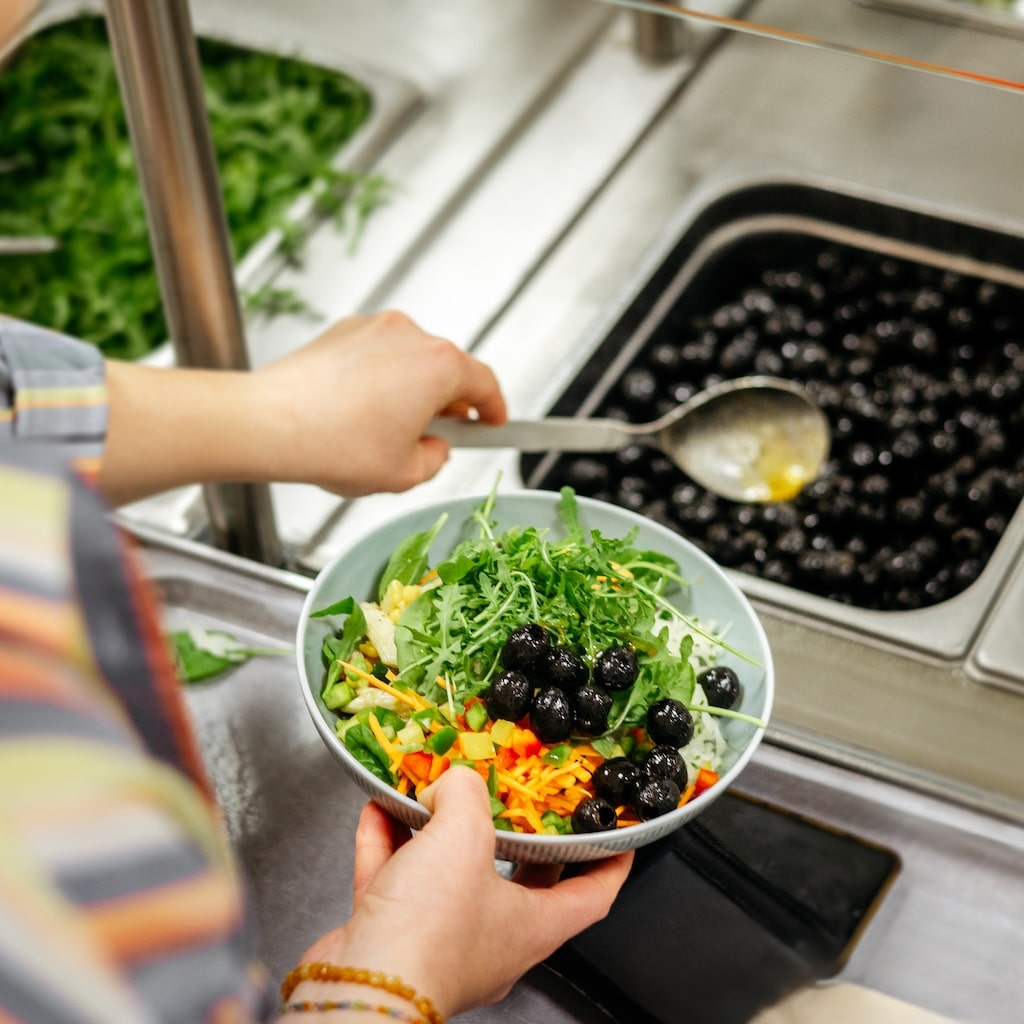
Sustainability in our canteens
Going to the cafeteria? Bring your own dishes!
Don’t have time to eat in the cafeteria? No problem! Just bring your own lunchbox and cup and take your food and drink with you in them.
Leftovers
Our kitchen managers plan the meals so efficiently that as little leftover food as possible is left over. Food that we are not allowed to reuse is saved through our cooperation with foodsharing e.V. The volunteer “food rescuers” regularly collect leftover food, which enables us to significantly reduce our food waste.
Work clothes
Our staff in the cafeterias and bistros wear work uniforms that are OEKO-TEX® certified.
Drinking water dispenser
In the Mensa am Aasee there is already a drinking water dispenser, and we plan to equip other canteens and bistros with them soon.
Regional partners
We focus on regional products and work closely with partners who are all located within a 50 km radius of Münster:
- Potatoes from the Münsterland tuber
- Milk and dairy products from Hof Große Kintrup
- Bread and rolls from Kiepenkerl Bakery
- Beef from Hof Keil
- Pork from Hof May
- Lemonades from liba
- Water and spritzers from Salvus and Sawell
- Fresh eggs from the Brüning Südhof farm
- Asparagus and strawberries from the Lütke Zutelgte farm
- Oat drinks from Ährenbrüder
- Beer from the Pinkus Brewery


Eating climate-consciously - simply with the KlimaTeller
The KlimaTeller allows you to choose your meals with climate-friendliness in mind and is designed to make it easier for you to eat in a more climate-friendly way in the canteen. The KlimaTeller can be recognized by the KlimaTeller logo on the menu.
A dish is awarded the KlimaTeller if it produces at least 50% less CO2e emissions than a comparable dish. This takes into account the CO2e emissions of all the ingredients on the plate that are produced from the field to the kitchen. This allows you to see at a glance which dishes are particularly climate-friendly.
What do the symbols mean?
With the 5-symbol rating system, you can see at a glance how climate-friendly a product, dish or individual ingredient is. The rating ranges from 5 = very good to 1 = very bad and shows you how high the CO2e emissions are compared to similar foods.
Where does the data come from?
The Eaternity Database (EDB) contains CO2e equivalents, values and unit processes for all common foods based on seasonality, cultivation methods, transportation, preservation and processing models.
Here, a greenhouse model was developed to determine the CO2e emissions associated with greenhouse heating in both organic and traditional agriculture. The individual values for CO2e are the result of a collaboration with scientists from the Zurich University of Applied Sciences (ZHAW) and Quantis World Food Database, University of Zurich (UZH), Swiss Federal Institute of Technology Zurich (ETHZ), Research Institute of Organic Agriculture (FiBL), ecoinvent v3.6, Agribalyse, Agrifootprint, peer-reviewed literature, reports (gray literature), extrapolated; or based on Eaternity’s own research, which was subsequently adjusted to ensure comparability.
The EDB is one of the largest and most comprehensive databases that calculates CO2e emissions for food products worldwide. It includes nutritional values, the water scarcity footprint, and our Health Score, which assesses the health risk factors associated with your food consumption.
Further information on the Eaternity CO2 footprint can also be found at: https://eaternity.org/foodprint/

Frequently asked questions about Sustainability
What awards has the Studierendenwerk Münster received?
In 2026, the Bispinghof cafeteria was awarded “Silver” status by PETA for its vegan offerings. The Mensa am Ring cafeteria also received 3 out of 5 stars in 2023 and is among the most vegan-friendly cafeterias in Germany. We are also a member of the “Fairtrade Town Münster” steering committee and have been working with foodsharing e.V. since 2017 to reduce food waste.
How can I contribute to sustainability when I go to the canteen?
If you’d like to take your meal with you, you can bring your own suitable container and have the food packed in it. Also, check the menu in advance and choose a portion that meets your needs. This will help reduce packaging waste and food waste.
How is leftover food dealt with in the canteens?
Our kitchen managers plan the required quantities based on demand to ensure that as little as possible goes to waste. Unserved food that is still suitable for distribution is regularly picked up by volunteers from foodsharing e. V.
Are there drinking water dispensers in the canteens?
Yes, in the Mensa am Aasee a drinking water dispenser has already been installed. We are also planning to equip other canteens and bistros with drinking water dispensers in order to reduce the use of disposable plastic bottles.
Which regional partners does the Studierendenwerk Münster supply?
We work together with various regional partners, including:
- Potatoes from the Münsterland tuber
- Milk and dairy products from Hof Große Kintrup
- Bread and rolls from Kiepenkerl Bakery
- Beef from Hof Keil
- Pork from Hof May
- Fresh fruit and vegetables from Manss
- Chocolate bar from GEPA
- Lemonades from liba
- Water and spritzers from Salvus and Sawell
- Fresh eggs from Hof Brüning Südhoff
How are CO₂e emissions taken into account when planning meals?
In collaboration with NAHhaft e. V. and eaternity, we incorporate information on the CO₂e emissions of the food we use into the menu planning for our cafeterias. The available data allows us to compare dishes based on their CO₂e emissions and to take this information into account during the planning process.
How can I provide feedback or suggestions?
Please feel free to share your questions, ideas, or suggestions regarding our initiatives and projects. Just use the contact information provided below. We look forward to hearing from you.

