
Student Financing
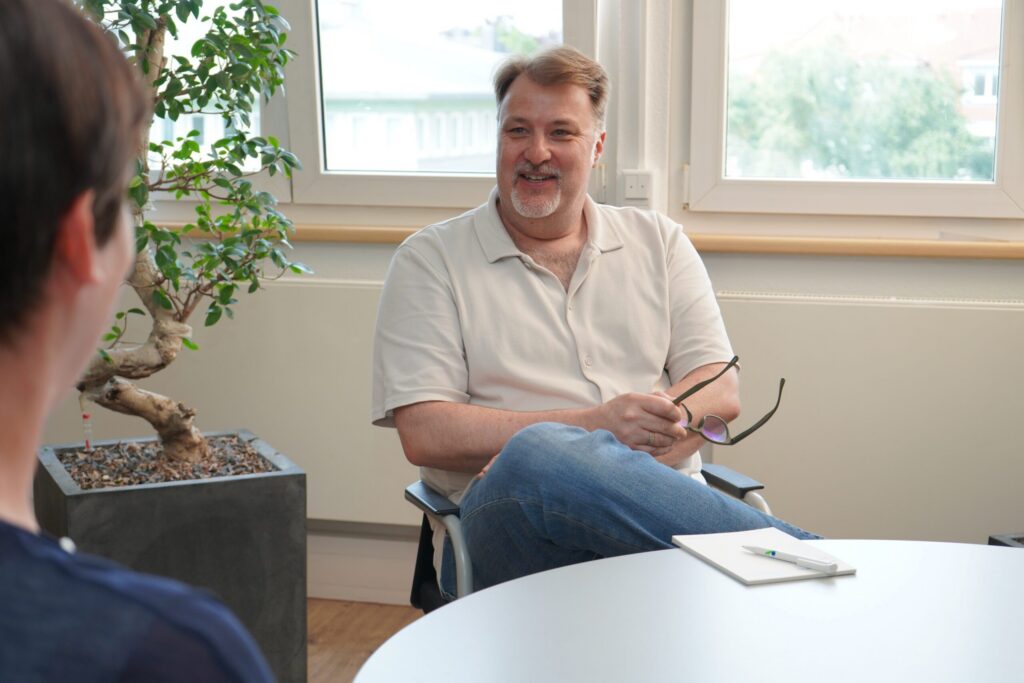
The financial support provided by BAföG is indispensable for many students – making it all the more important that applications are processed reliably and quickly. However, at the end of 2024 in particular, there were increasing delays, which became a burden for many applicants. Oliver Valerius, Head of Social Affairs, explains the reasons in a brief interview.
Many students complain about long waiting times for BAföG applications. What are the typical reasons for such delays?
One of the most common reasons is that applications are submitted incompletely. We then have to make further enquiries, which takes time. In some cases, we also need information from other authorities, which also delays processing. Especially in the fall, when many new applications are received, the workload increases significantly. In Münster, we process around 8,000 to 10,000 applications a year.
Unfortunately, longer waiting times are currently not an isolated case. A central problem is the so-called media discontinuity: although applications are submitted digitally, they cannot yet be automatically transferred to our internal systems. This results in additional manual work, which slows down the processes.
What are you doing to improve the situation?
We are working on several areas: Internally, we are currently introducing a digital file that should enable faster processing in the future. At the same time, we are developing a central info point to be able to answer questions more quickly and clarify problems with incomplete applications at an early stage. Some processes still need to become established, but we are confident that further technical implementation will significantly reduce processing times in the future.
We also have recommendations for students: It helps enormously if documents are only submitted once – ideally via BAföG.digital. Multiple submissions via different channels cause a lot of extra work, as we have to reconcile the data.
Study start-up aid well received
New grant to support students from low-income households: Since the winter semester 24/25, students in their first semester from low-income households can apply for a one-off study start-up grant of 1,000 euros.
Read more
An application can be submitted until the end of the month following the month in which the training begins. The aim of the grant is to further improve educational equality in Germany. The Studierendenwerk Münster received a total of 248 applications. Of these, 170 were approved. “The number of approved applications shows that the study start-up grant is well received by students and makes a real contribution to easing the financial burden,” emphasizes Oliver Valerius, Head of Social Affairs.
The grant is subject to several conditions: It is explicitly aimed at students who have enrolled at a university in Germany, an EU member state or Switzerland for the first time and are under 25 years of age at the start of their studies. Another requirement is that students must have received certain social benefits, such as citizen’s allowance, child supplement or housing benefit, in the month before starting their studies. And this is also the most common reason for rejection: The students’ social benefit certificates often did not cover the relevant month before the start of the course.
Simple help with difficult applications
Mural Körük, student finance officer, offers practical help with BAföG at the AStA application café.
Read more
In order to make the often complex process of applying for BAföG easier for students, Mural Körük, student finance officer, has been volunteering at the AStA application café at Münster University for several years. “Our aim is to support students at an early stage so that we receive their BAföG applications as completely and correctly as possible. This not only saves time in the processing process, but also gives students a good feeling,” emphasizes the clerk.
Open consultation hours as a valuable addition
The BAföG application café usually takes place on two dates each semester. Students have the opportunity to clarify their questions in personal discussions without making an appointment in advance. “It’s often about first-time applications,” reports Mural Körük. “Students want to know which forms are required, what information needs to be entered where and how to provide proof of performance correctly.” In addition to the clerk, two AStA members counseled the students seeking help. “It gives me great pleasure personally,” says the administrator. “The gratitude of the students shows me how valuable our support is.”